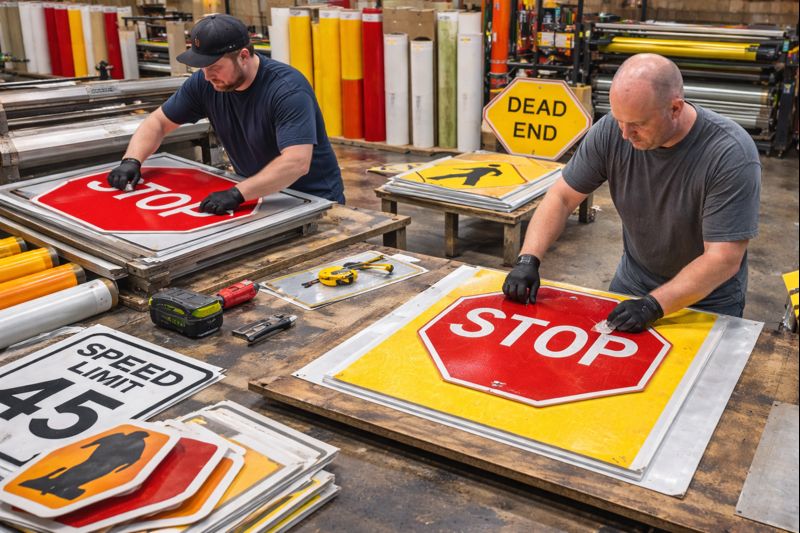
It’s inevitable to see the traditional method of making traffic signs being replaced by large industrial traffic sign printers, as they boast the advantages below over the former:
Print speed
The printers for traffic signs launched in the last 5 years are generally 3-5 times faster for printing than those that had served the market for decades. For example, the Masung’s MS-1590 Digital Traffic Sign Printer delivers a rapid output of 25 m²/hour, five times faster than manually made traffic signs, which makes it the optimal solution to tackle road construction projects with critical deadlines.
Compliance
As there is no international standard for how road traffic signs should look, I guess most road sign printing machine manufacturers will take the traffic signs of developed countries as a standard, particularly nations such as North America or Western Europe. That way, the traffic signs made by those manufacturers will be accepted for most countries worldwide, which also regard the developed countries’ traffic signs as the standard.
In the case of your traffic signs that look different from the “standard,” you have the option to discuss with the traffic sign printer supplier for customization or modification prior to paying for the order.
Cost efficiency
The traditional methods of making traffic sign printers, such as screen printing, vinyl cutting, and outsourced fabrication, are way more costly than the digital traffic sign printers. This is compared not from a sole factor but from improvements across materials, labor, time, inventory management, and reduced replacement times.
With the realization of digitalization, traffic sign printers no longer require plates, films, or screens to be able to print traffic signs.
Reduced material cost: As digital traffic sign printers are designed to use ink to print only the required area, this reduces the trial-and-run errors. In comparison, the traditional method for making traffic sign printers causes waste due to color misalignment, cutting errors, leftover vinyl, and test prints.
Massive labor saving
Making traffic signs through the traditional method requires at least a duo or a single person, which will take longer. Adopting the digital traffic sign printer, it skips the steps of manual screen setup every time you need to print, along with manual lamination, hand trimming and mounting.
Faster production
In general, the industrial traffic sign printers are 3-5 times faster for output than the traditional method.
Reduced inventory & storage cost
Digital traffic sign printers support print on demand, which means you don’t need to store piles of signs and other material in your warehouse. Leaving part of them wasted in the end.
Reduced replacement frequency
As digitally printed traffic signs use UV-resistant inks to print, combined with weatherproof coatings and high-quality reflective materials, these guarantee at least a years-long lifespan of the traffic signs out there, overcoming the harshness of weathering. In other words, it reduces the traffic sign replacement work dramatically.
How do traffic sign printers work?
A digital traffic sign printer is an industrial printing machine designed to produce durable, high-visibility road signs by printing graphics directly onto reflective materials or sign substrates. Unlike traditional screen printing or vinyl cutting, digital printing uses a computer-controlled, inkjet-based process that is faster, more precise, and more flexible.
Here are the steps in order of how a traffic sign printer works:
1. Digital Design Preparation
The print process starts by customizing your design on software, which is usually provided by the traffic sign printer manufacturer. You can design or customize any specific traffic sign with its symbols, colors, or size.
2. Material preparation
Outperforming the traditional method of making road signs, the digital traffic sign printer requires much less material and labor to get the work done. Furthermore, the impeccable material, such as reflective film and durable PVC substrates, is included in your initial purchase, prolonging the printing period until its next replenishment.
As a digital traffic sign printer for years, Masung is one of the few traffic sign printer companies that include complementary durable reflective OC film that guarantees a minimal number of years of use for the traffic signs. More importantly, it enhances visibility in dim and low-light environments and even in poor weather conditions. The material is loaded into the printer, which is capable of printing on both the front and back sides for double-sided visibility.
3. Printing Process
The newest generation of printers for traffic signs adopts thermal transfer printing, UV printing or solvent-based ink printing. These methods allow the printer to apply the ink to the material while maintaining high durability, UV resistance, and color vibrancy.
Many models also come with cutting tools to make precise shapes or borders. Despite printers for traffic signs being bulky, like the model MS-1590, it features one-click automated operation for consistent print alignment, reducing misprints and waste. User-friendly editing software is included for customization without needing pre-made templates. An integrated cooling system maintains stable temperatures during continuous use, supporting reliable operation of this traffic sign printer.
As the printing persists towards the ending, the cutting and drying functions come into play to ensure the ink is fully set and resistant to smudging, fading, or weathering, which facilitates the entire process and saves you the cost and labor to finish the printing work.
What Features to Look For When Choosing a Traffic Sign Printer?
Durable & Reflective Print
To put aside the specific functions or components of printers for traffic sign printing, a traffic sign printer that can print durable and reflective traffic signs is paramount. Substandard traffic signs fail to withstand the harsh weather for a certain amount of time; what’s more, they don’t feature reflectivity, which results in a host of car crashes or run-over accidents you see on the road.
Software compatibility & print width
Make sure the traffic sign-making equipment you are interested in buying is compatible with popular software. To eliminate the hassle and risk completely, buying a road sign printing machine from manufacturers like Masung will be the right choice.
Generally speaking, industrial traffic sign printers are built wider to produce wide-format traffic signs, wide enough to meet all needs. Still, it’s advised to measure this metric according to your personal needs. It’s not necessary to buy a large industrial traffic sign printer for printing medium or even smaller-sized traffic signs.
Operation Convenience
It makes no difference for buying a bulk printer for traffic signs that requires a particular technique to operate than hiring a group of workers to do the work. Buy one easy-to-operate yet durable reflective traffic sign printer instead.
Maintenance and Support
Since the traffic sign-making equipment is primarily used for printing traffic signs on a large scale, they are often seen in institutions or scenes like cities, counties, and state Departments of Transportation (DOTs); public transportation agencies; construction companies; and sign shops & print service providers. But don’t think it requires a team of professionals to serve its purpose; as a matter of fact, most of the road sign printing machines require no technician to function, as they are highly automated.
Consider the best traffic sign printers that are easy to clean and maintain, as consistent performance is critical for large-scale production. In addition, prioritize road sign printing machine manufacturers with instant responses for after-sales or technical support.
Top-Rated Traffic Sign Printers
Masung MS-1590 traffic sign printer
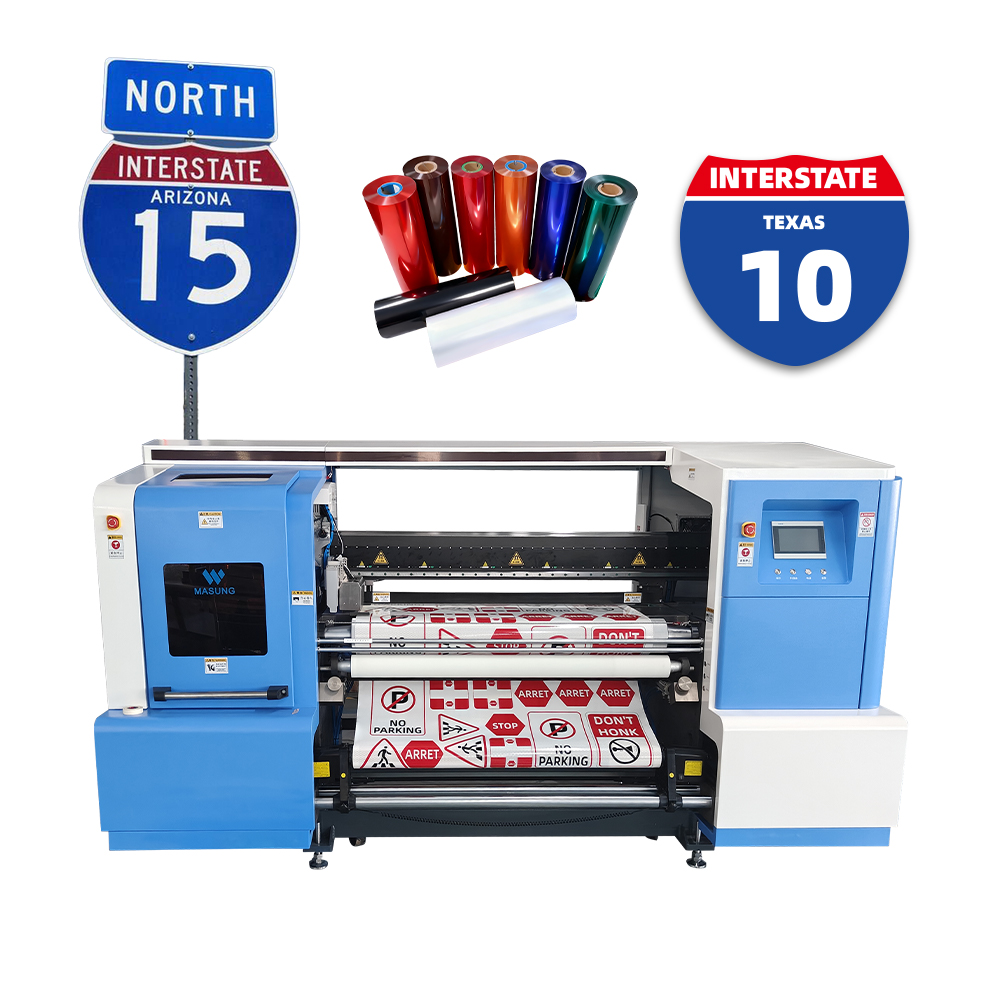
Key features of the reflective traffic sign printer:
- High-Performance Industrial Traffic Sign Printing
- Fast and Efficient Production
- Exceptional Durability for Outdoor Use
- Material & Cost Efficiency
- Easy and User-Friendly Operation
- Professional-Grade Output Quality
Great for:
✔ On-site traffic sign production
✔ Municipal road safety departments
✔ Construction and infrastructure contractors
✔ Signage manufacturers expanding into reflective traffic signs
Orafol UV Traffic Sign Printer
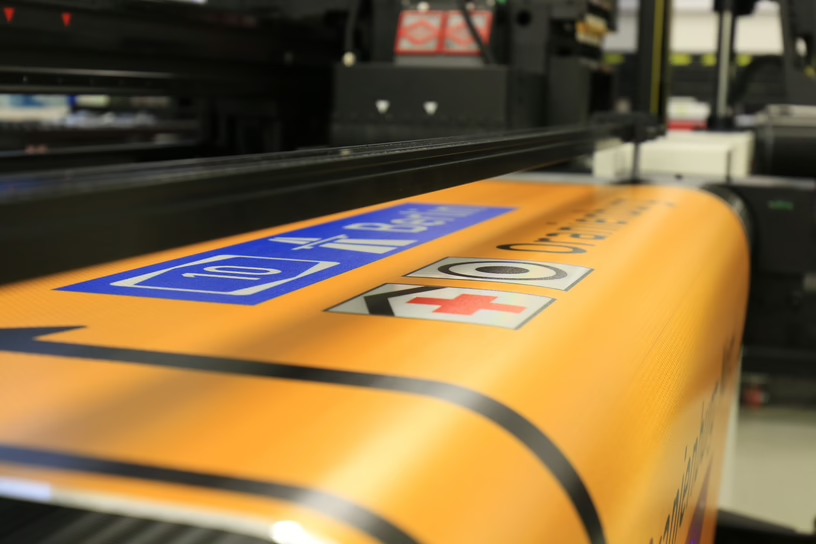
The key features of the industrial traffic sign printer:
High-Quality, Durable Output
Reliable & Efficient Performance
Professional Ink System
Flexible Production Workflow
Optimized Digital Traffic Sign Printing System
Ideal for:
✔ Municipal public works sign manufacturing
✔ Professional sign shops specializing in regulatory signs
✔ Road and highway contractors
✔ Traffic safety and infrastructure departments
Roland DGA TrafficWorks
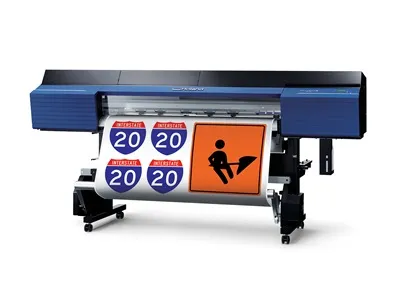
The key features of the industrial traffic sign printer:
Turnkey Traffic Sign Printing Solution
Complete Package Components
High-Quality Color & Reflective Output
Streamlined Workflow & Usability
Business Growth Opportunity
Ideal for:
✔ Print service providers
✔ Sign shops
✔ Graphic businesses
Avery TrafficJet™ Pro
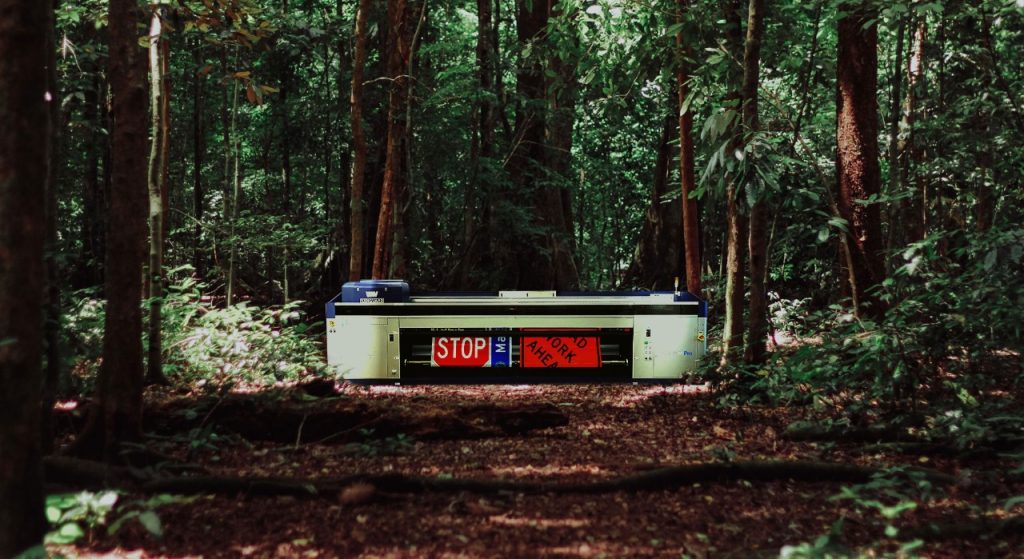
The key features of the digital traffic sign printer:
High-Speed, High-Volume Output
True Traffic Color™ Spot Inks
Efficient Workflow & Material Handling
Integrated Solution with Full Support
Ideal for:
✔ Sign shops transitioning from screen printing to digital
✔ Traffic sign manufacturers needing high throughput
✔ Municipal and government signage production
✔ Fabricators requiring durable, compliant road signage
TrafficJet™ Xpress
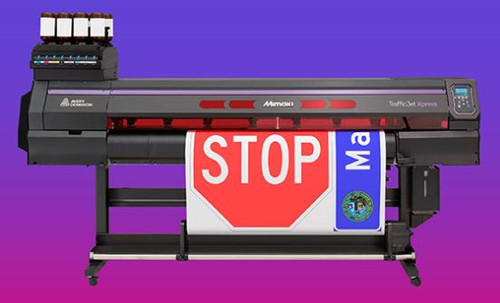
The key features of the digital traffic sign printer:
Easy Operation & Maintenance
Complete Printer System
True Traffic Color™ Spot Inks
Advanced UV-LED Technology
Ideal for:
✔ Sign shops transitioning to digital traffic sign production
✔ Municipal departments needing durable, compliant signage
✔ Custom signage producers
✔ Businesses seeking a compact UV-LED traffic printer