Introduction: Road Safety Challenges in Low-Visibility Conditions
Road accidents remain a serious concern worldwide, and various factors can make driving more dangerous. Adverse weather, poor visibility at night, and insufficient retroreflective performance of traffic signs are three distinct factors that can independently increase road safety risks.
Heavy rain and fog can obscure the road environment and reduce the distance at which drivers can see potential hazards. At night, limited ambient lighting can make it harder to identify road conditions, obstacles, and other important information in time. Separately, traffic signs with inadequate retroreflective performance may be difficult to see when illuminated by vehicle headlights, reducing the time drivers have to recognise warnings and respond appropriately.
Although these challenges differ in their causes, each can affect drivers’ ability to perceive road information and make timely decisions, increasing the risk of accidents.
Why Traffic Sign Quality Matters: A Controllable Factor in Road Safety
For this article, factors affecting road safety can be grouped into two broad categories based on how directly they can be addressed through human intervention:
- Natural factors: Adverse weather conditions, such as heavy rain and fog, and natural lighting conditions, such as darkness, can reduce driving visibility. These environmental conditions cannot be directly controlled by traffic sign manufacturers.
- Human-related factors: Vehicle conditions, driving behaviour, road infrastructure, and traffic sign quality can all influence road safety. Among these, traffic sign quality is a controllable factor that manufacturers can improve through appropriate materials, accurate printing, and consistent production processes.
Although natural factors cannot be eliminated, their impact on driving can be addressed in part by improving controllable elements. Traffic signs with clear graphics, appropriate colours, and suitable retroreflective performance can help drivers recognise road information more effectively under challenging conditions.
This is why traffic sign quality matters: while printing alone cannot prevent accidents or guarantee visibility, a suitable traffic sign printer can help manufacturers produce consistent, high-quality signs when used with compatible materials and appropriate production processes. Choosing the right road sign printer also requires considering the materials and standards relevant to the intended application.
How Traffic Sign Printers Help Produce High-Visibility Traffic Signs
A professional digital traffic sign printer helps manufacturers produce clear, consistent graphics on suitable sign materials. Depending on the technology and application, it can print warning symbols, directional arrows, road names, speed limits, and other traffic information with accurate alignment and detail. An advanced road sign printer may also support more flexible production workflows, depending on its configuration and capabilities.
However, clear graphics are only one part of sign visibility. Many road signs use reflective sheeting to help drivers see them when illuminated by headlights, especially at night. Can a digital printer print on reflective sheeting? Some systems can, but suitability depends on the printer configuration, sheeting type, ink chemistry, and curing method. Manufacturers should confirm compatibility with both the printer supplier and the material supplier before production.
Testing the actual sign material before a full production run can also help verify graphic clarity, colour appearance, and ink adhesion. With the right equipment and process, manufacturers can benefit from:
- Clear graphics: Accurate text and symbols help drivers recognise sign information.
- Consistent production: Repeatable settings support uniform output across multiple signs.
- Flexible customisation: Digital workflows can simplify short runs and application-specific designs.
- Efficient workflow: Suitable equipment can reduce manual preparation and make order changes easier.
A reflective traffic sign printer must be compatible with the intended reflective materials and printing process. Actual nighttime visibility depends on the sheeting grade, printing coverage, colour selection, installation angle, and compliance with applicable specifications.
Durability is equally important. Rain, sunlight, temperature changes, and abrasion can affect signs over time. Manufacturers should therefore assess ink adhesion, weather resistance, and compatibility with protective finishes to help ensure the finished signs suit their intended outdoor use. These considerations are also important when selecting a reflective road sign printing machine for applications that require durable, visible signs.
How to Choose a Traffic Sign Printer for Different Road Conditions and Applications
However, the right printing solution depends not only on technical features but also on where and how the signs will be used. Different road environments and production needs call for different priorities when choosing traffic sign printing equipment.
1. Highways and High-Speed Roads
Traffic signs on highways need to be recognised quickly by drivers travelling at high speeds. Manufacturers should prioritise printers and compatible materials that can produce clear graphics and meet the relevant requirements for reflective performance and sign specifications. Consistent output is particularly important for signs with complex symbols, directional information, or multiple lanes. A wide-format traffic sign printer may be worth considering when production involves larger sign panels.
2. Urban Roads and Intersections
Urban environments often require a variety of signs, including speed limits, parking restrictions, directional signs, and pedestrian warnings. Businesses producing many sign types or frequent design changes may benefit from a flexible digital printing workflow. Before purchasing, check whether the equipment supports the required sign dimensions, graphics, and materials.
3. Rural Roads and Roads with Limited Lighting
Rural roads may have limited street lighting, while rain, fog, and other weather conditions can further reduce visibility. Sign manufacturers should consider printing systems compatible with suitable reflective materials and outdoor sign constructions. Ink adhesion, weather resistance, and protective finishing should also be evaluated as part of the complete production process.
4. Temporary Roadworks and Frequently Updated Signs
Roadworks, detours, and changing traffic arrangements may require signs to be produced or updated at short notice. Businesses handling these orders may prioritise quick artwork changes, short-run production, and straightforward job setup. The chosen traffic sign printing machine should also support the materials and sign formats required for the intended temporary application.
Conclusion: Choosing the Right Traffic Sign Printing Solution
Improving traffic sign visibility requires more than clear printing. Material compatibility, graphic quality, outdoor durability, and applicable safety standards all affect the final result. Choosing suitable printing technology helps manufacturers maintain consistent output and meet different production needs.
If you are looking for a reliable solution for traffic sign production, we recommend the Masung MS-1590 Industrial Digital Traffic Sign Printer.
- Wide material compatibility: Supports Class II–V reflective films for different traffic sign applications.
- High production efficiency: Prints up to 25 m² per hour, helping businesses handle larger production orders.
- Reduced material waste: Automatic design nesting helps optimise material usage and reduce reflective film consumption.
- Outdoor durability: OC protective films help protect finished signs against weather exposure, with the product page specifying a service life of at least nine years.
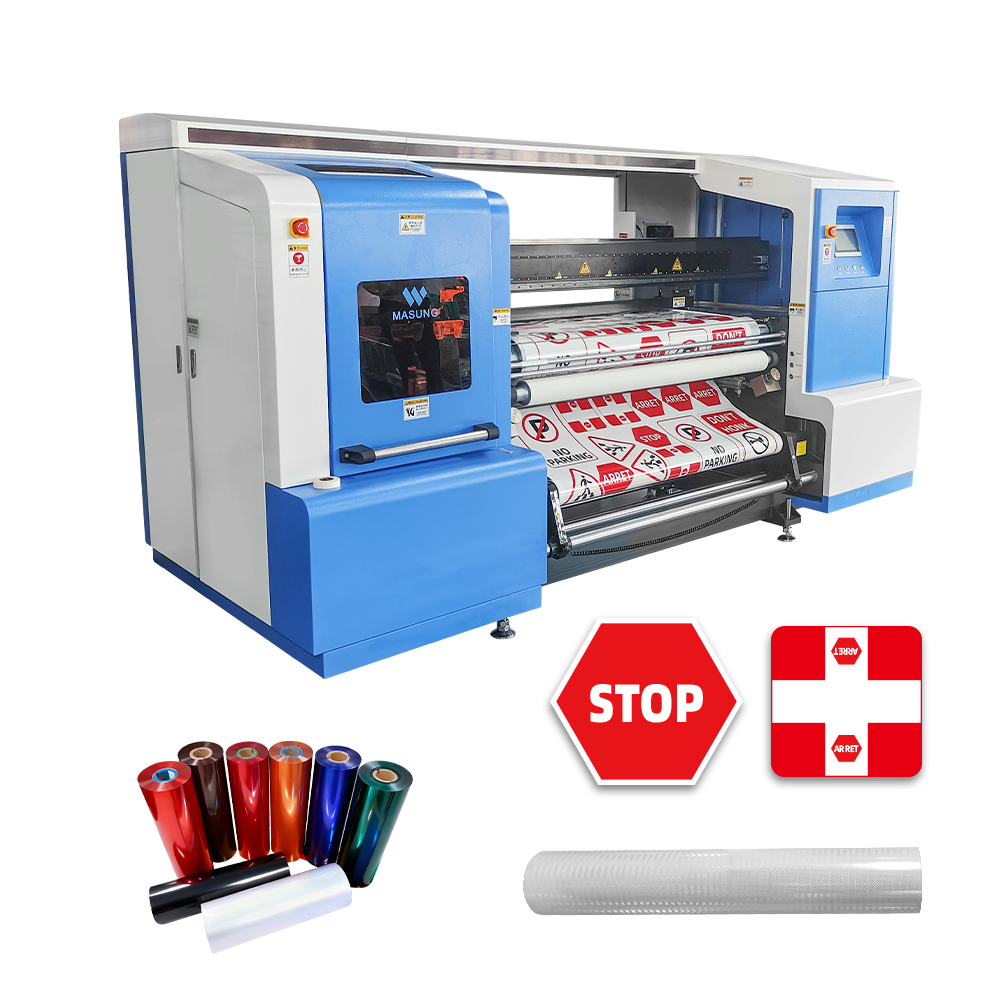
If the MS-1590 is too large for your workspace or does not suit your production requirements, we also offer customised traffic sign printing solutions tailored to your business needs.