Why Traffic & Street Sign Printing Matters
Nowadays, durable, visible, and compliant traffic signage is designed to withstand harsh environmental conditions while helping to improve road safety.
Modern traffic signs are produced in high resolution and made from high-quality materials. Many are applied or laminated with reflective films, which provide outstanding visibility even in complete darkness from long distances. This significantly reduces the number of road accidents at night.
With clear traffic signs positioned along roads, drivers and pedestrians are more likely to notice and follow traffic rules. As a result, the number of collisions and run-over accidents can be greatly reduced.
Traffic control: Anyone who has driven in developing and densely populated countries where some roads lack traffic signs will recognise how easily traffic congestion can occur. In such situations, constant honking from vehicles can become extremely frustrating. By contrast, cities with clearly visible traffic signs tend to experience far fewer traffic jams. Road signs signal that there are rules in place to ensure everyone’s safety, making traffic & street signs essential for modern transportation systems.
What Is a Traffic Sign Printer?
A traffic sign printer is a specialised printing machine designed to produce high-quality and durable traffic and street signs. These printers are used to create road signs, warning signs, regulatory signs, and other public safety signs that are essential for transportation systems. They are widely used by government agencies, municipalities, and traffic management companies.
Types of Road & Street Sign Printing Machines
Thermal Transfer Printer for Traffic Signs
There are around eight or nine types of traffic sign printers, each differing in application and industry use. Among them, the thermal transfer printer for traffic signs is one of the most widely used due to its advantages.
This technology transfers ink from a heated ribbon onto the printing material, producing traffic signs that are durable, clear, and capable of withstanding harsh weather conditions.
It is also worth noting that road sign printers designed to print on reflective films are becoming increasingly popular because of their exceptional visibility in low-light conditions or total darkness.
Direct Thermal Printer for Traffic Signs
Unlike thermal transfer traffic sign printers, direct thermal road sign printing machines produce text, symbols, or graphics directly on heat-sensitive materials. However, these prints are less durable and tend to fade over time, which is why they are mainly used for temporary applications.
Although the printer is easier to operate and generally prints faster than the thermal transfer traffic sign printer, it is rarely used for printing street signs due to the shorter lifespan of the prints.
Laser Printer for Traffic Signs / UV Flatbed Traffic Sign Printers
These printers are suitable for mass production, engraving laser beams onto printing surfaces such as aluminium boards, PVC, acrylic, or reflective films. However, they are not as commonly used as digital traffic sign printers when printing on reflective materials.
Screen Printing Machine for Traffic Signs
These machines transfer ink onto printing materials through screen printing. They are typically used to produce simple yet durable street signs in batches, particularly large or wide-format traffic signs made from metal.
Since they are compatible with materials such as metal, plastic, and glass, they are commonly used to produce standardised traffic signs in large quantities, especially single-colour road signs.
Materials Used in Road Sign Printing
Below are some of the most commonly used materials for custom road sign printing, each chosen according to its suitability for specific locations.
Reflective film: This is the most widely used material for traffic sign printing. It reflects light effectively, ensuring that traffic signs remain clearly visible even in low-light conditions or darkness.
Common types include engineering reflective film, high-intensity reflective film, and highly reflective film, each suitable for different traffic signs.
Aluminium panels: Due to their durability and corrosion resistance, aluminium panels are widely used for traffic signs exposed to harsh weather conditions. They are lightweight yet strong.
Typically, aluminium panel traffic signs are laminated with reflective film to improve visibility.
Polyvinyl Chloride (PVC): PVC materials are cheaper than aluminium panels and are often used for temporary traffic signs, although they are less durable and less resistant to corrosion.
PETG (Polyethylene Terephthalate Glycol): PETG is frequently used for road signs because it offers resistance to scratches, high temperatures, and ultraviolet exposure. Being lightweight, it is often used for public bus stop signs.
Polycarbonate: This strong plastic material provides excellent impact resistance. It is often combined with reflective film, UV printing technology, and thermal transfer printing technology to ensure good visibility in various environments.
Applications: Who Uses These Machines?
Traffic sign printers are used across many industries and organisations to produce road and street signage.
1. Government Agencies
The Department of Transportation (DOT) is responsible for producing and installing road traffic signs such as traffic regulation signs (speed limit sign and parking sign), warning signs, and information signs. To accomplish this, they require reliable traffic sign-making equipment capable of producing durable and reflective traffic signs.
2. Municipalities and Local Government
Municipalities and local governments oversee the installation and maintenance of traffic signs for roads, streets, and pavements. As a result, they frequently purchase road sign printers.
3. Traffic Signs Seller / Printing Service Company / Workshops
Businesses specialising in the production of road and street signs often provide services to governments, companies, and public institutions that require traffic signs.
4. Road Construction Companies
Construction companies frequently require temporary or permanent traffic signs for worksites, including road blockage signs, detour signs, and construction warning signs. With a large-format traffic sign printer, they can produce onsite traffic signs quickly to suit changing site conditions.
5. Parking Management
Large parking facility operators and property management companies, such as commercial real estate developers, hotels, and office buildings, often require street sign-making machines to print parking signs, vehicle lane signs, and entrance and exit signs.
Key Features to Look for in a Printer for Traffic Signs
When selecting a printer for traffic signs, it is important to evaluate several key features to ensure durability, accuracy, and efficiency.
1. Durability and Weather Resistance
Traffic signs must endure outdoor conditions, so the printer should produce long-lasting prints. Look for custom road sign printer models that use UV-resistant inks or weatherproof materials capable of resisting fading and withstanding rain, snow, sunlight, and extreme temperatures.
Signs should also resist scratches and abrasion caused by traffic, environmental exposure, and handling.
2. Reflective Printing Capability
The printer must be compatible with reflective materials such as reflective sheeting or vinyl to ensure traffic signs remain visible at night.
High-quality prints are essential so that text, graphics, and symbols remain legible under all lighting conditions.
3. Print Speed and Efficiency
Traffic sign production often requires large quantities, so fast printing speeds are important. Choose printers capable of delivering high output without sacrificing print quality.
Continuous operation capability is also essential for industrial or high-volume environments.
4. Print Resolution
High print resolution (DPI – dots per inch) ensures clear text and detailed graphics on traffic signs. This is especially important for signs that contain small text or detailed designs that must be readable from a distance.
Some printers also allow adjustable DPI settings for different types of signage.
5. Ink Type and Technology
UV ink is commonly used for traffic signs because it cures instantly under UV light, making it highly suitable for outdoor use. Solvent-based inks are also durable and weather-resistant.
Thermal transfer printing is another reliable option for producing long-lasting traffic signs on various materials.
6. Material Handling and Versatility
Traffic signs are printed on a variety of materials including aluminium, PVC, reflective sheeting, PETG, and vinyl. Ensure the printer can handle these materials efficiently.
The printer should also support large-format printing for road signs of different sizes.
7. Ease of Use and Software Integration
A user-friendly interface and simple controls help operators manage printing tasks more efficiently.
Compatibility with common design software or integrated design tools also makes it easier to design and customise traffic signs.
8. Cost of Consumables and Maintenance
Choose printers with cost-effective ink and material options, especially for high-volume production.
Low-maintenance printers with automated features such as printhead cleaning can help reduce downtime.
9. Compliance with Standards
The printer should be able to produce traffic signs that comply with local and international standards, such as those defined by the Manual on Uniform Traffic Control Devices (MUTCD) in the United States or similar standards elsewhere.
It should also support reflective sheeting that meets required visibility standards.
10. Cost of Ownership
Although high-quality traffic sign printers may have higher upfront costs, they can offer long-term savings through efficient operation, reduced maintenance, and lower downtime.
It is also important to select printers that come with reliable warranties and customer support.
11. Connectivity and Network Integration
Advanced traffic sign printers may offer remote monitoring, allowing operators to check printing status, ink levels, and other settings remotely.
Network connectivity also enables easy integration with production management systems.
12. Environmental Considerations
Some printers are designed to reduce energy consumption, minimise waste, or use environmentally friendly inks and materials. This may be important for organisations with sustainability goals.
Cost Considerations
Traffic sign printers vary widely in price depending on their scale and capabilities.
For small businesses or organisations with limited budgets, entry-level desktop or UV inkjet printers may be suitable. These machines are generally less expensive than mid-range road sign traffic printers or industrial traffic sign printers.
Entry-level desktop / UV inkjet printer for traffic signs: approximately $1,600 – $8,000
Mid-range traffic sign printers: $8,000 – $30,000
Large-format industrial traffic sign printers: $30,000 – $100,000+
Each category produces different volumes of traffic signs, so choosing the right level is important.
Key Cost Components
Printheads, UV lamps, and software
Substrates such as reflective films, aluminium, and coroplast
Design and workflow software integration
Installation, training, and facility setup
Some traffic sign printer manufacturers may provide free training, setup, or parts replacement.
Operating and Ongoing Costs
After purchasing a printer for traffic signs, organisations should also consider recurring costs.
Maintenance: Replacement of worn printheads and routine servicing.
Calibration and service contracts: Often charged by suppliers, although some provide them free of charge.
Consumables: Inks, laminates, reflective films, and substrates must be replenished regularly.
Labour: Unless the printer for traffic signs is highly automated, a trained operator may be required.
Long-Term ROI
Producing traffic signs in-house reduces reliance on external suppliers. Over time, this lowers per-unit costs and shortens production time, particularly when producing large quantities.
Many traffic sign printing businesses find that producing around 20–30 signs per month makes owning a printer more economical than outsourcing.
A digital traffic sign printer can also reduce material waste and labour compared with traditional processes such as screen preparation, lamination, and manual cutting.
How to Choose the Right Street Sign Maker Machine
If you require long-lasting traffic signs rather than temporary ones, choosing the right printer for traffic signs is essential.
For small workshops, an entry-level traffic sign printer may be sufficient.
Production volume should always be considered. Lower production volumes generally mean lower consumable usage and reduced operating costs.
Municipal departments, however, often require higher production volumes depending on city size, road networks, and infrastructure activity.
They must produce regulatory signs (stop, speed limit, yield), warning signs (curves, pedestrian crossings, school zones), directional signs, and temporary construction or detour signs. They also need to replace damaged or vandalised signs regularly.
For these reasons, mid-range or industrial large-format traffic sign printers are usually required.
Conclusion & Call to Action
Traffic and street sign printing plays a critical role in road safety, effective traffic control, and regulatory compliance. High-quality traffic signs enhance visibility, especially at night, reduce accidents, and help maintain orderly transportation systems.
Selecting the right traffic sign printer requires careful evaluation of factors such as production volume, material compatibility, durability requirements, compliance standards, and long-term operating costs.
Small workshops producing limited quantities may benefit from entry-level printers for traffic sign printing, while municipal authorities and large production facilities may require mid-range or industrial large-format printing systems.
Beyond the initial investment, it is important to consider ongoing expenses such as consumables, maintenance, labour, and software integration to ensure a sustainable return on investment.
Ultimately, the best traffic sign printer is not necessarily the most advanced or the cheapest. Instead, it is the printer that delivers durability, compliance, efficiency, and scalability for your specific application.
If you are currently searching for a large-format traffic sign printing machine, Masung offers the MS-1590 traffic sign printer as an industrial solution.
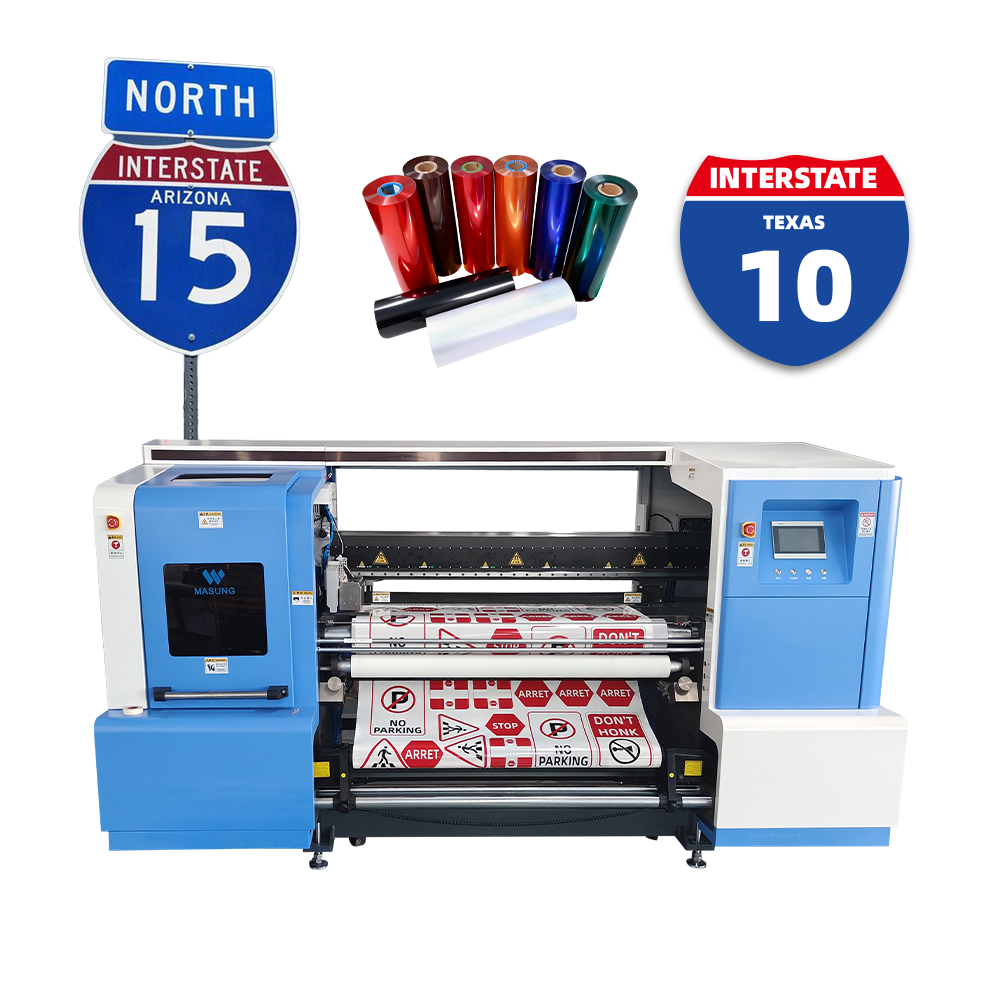
This industrial digital traffic sign printer provides reflective output and durability for severe weather conditions, including:
High-Speed Digital Road Sign Printing Technology
Long-Lasting, Weather-Resistant Reflective Sign Output
Automated, User-Friendly Operation for Precise Printing
Cost-Efficient and Environmentally Friendly Sign Production
And more.