The Role of Hang Tags in the Apparel Industry
Hang tags are an important part of clothing branding, product identification, and retail management. They typically display information such as brand logos, product names, sizes, prices, barcodes, and QR codes, helping customers identify products and businesses manage their inventory.
For clothing manufacturers and retailers, hang tag requirements often vary across product styles, sizes, and seasonal collections. When product details or branding change frequently, relying entirely on preprinted tags may increase inventory pressure and limit flexibility.
A clothing hang tag printer provides a practical way to produce or customize tags according to different product requirements. However, choosing the right equipment involves more than print quality alone. Businesses also need to consider tag materials, printing accuracy, production volume, and operating costs to find a solution that fits their workflow.
Key Factors to Consider When Choosing a Hang Tag Printer
Selecting the best printing equipment requires evaluating the actual printing tasks, media requirements, and production environment. A specialized hang tag printer may be suitable for businesses with specific tag formats and recurring production needs.
- Print quality and resolution: Clear text, sharp logos, and readable barcodes are essential. A resolution of 300 dpi is a useful benchmark for many detailed tag-printing applications, although the required quality depends on font size, barcode dimensions, and scanning conditions. Always test representative tag designs before making a purchasing decision.
- Media compatibility: Hang tags vary in size, thickness, surface finish, and material. Check whether the equipment supports the intended tag stock and feeding method. A paper tag printer for clothing must be compatible with the actual tag material, particularly when using thick, coated, or specially finished stock.
- Printing speed and workload: Small clothing businesses may prioritize flexibility and affordable operation, while garment factories may need consistent output across larger batches. Evaluate practical throughput rather than relying exclusively on advertised maximum speeds.
- Connectivity and workflow integration: USB, network connectivity, or wireless options may simplify different working environments. Confirm compatibility with existing computers, tag-design software, inventory systems, and barcode-generation workflows.
- Operating costs and maintenance: Consider consumables, printhead maintenance, setup time, and the availability of replacement parts. The most suitable solution balances print quality, reliability, operating costs, and expected workload.
Practical Considerations for Hang Tag Printing in the Apparel Industry
In apparel production and retail, hang tag printing needs vary from routine preparation to urgent last-minute changes. Understanding these situations helps businesses choose equipment that fits their actual workflow.
- Routine production and inventory planning: Clothing manufacturers handling multiple styles and sizes need to organize tag designs and product information in advance. Standardized templates for brand logos, product names, and other fixed details can help maintain consistency across batches and reduce repetitive design work. A clothing swing tag printing machine should fit the company’s usual tag formats and production process.
- Product changes and new collections: When launching a seasonal collection or updating prices, sizes, colors, or SKUs, businesses may need to revise tag information quickly. Flexible editing and on-demand printing can help reduce dependence on large stocks of preprinted tags, particularly when product details change frequently.
- Barcode accuracy before shipment: Incorrect or unreadable barcodes can cause scanning problems during warehousing, distribution, and checkout. Before printing a large batch, test sample tags with the scanners used in actual operations. Check code dimensions, print clarity, and contrast to help prevent avoidable identification errors.
- Urgent replenishment and last-minute orders: When a production batch needs additional tags, a retailer discovers missing tags before a product launch, or an order requires revised product information before shipment, waiting for externally printed tags may delay operations. An in-house garment hang tag printing machine can provide more control over replenishment and small-batch printing, provided the required materials and approved designs are available.
Before adopting a solution, test it with actual tag stock and representative designs. Confirm material compatibility, printing quality, software requirements, and operating costs to ensure the equipment can handle both routine work and time-sensitive requests.
A Practical Hang Tag Printing Solution for Clothing Manufacturers and Retailers: Masung MS-CH651-M1
For clothing manufacturers, fashion brands, and retailers that need to produce customized hang tags in-house, the Masung MS-CH651-M1 is one option to consider. It is designed for businesses looking for a dedicated printing solution to manage product information and tag production more flexibly.
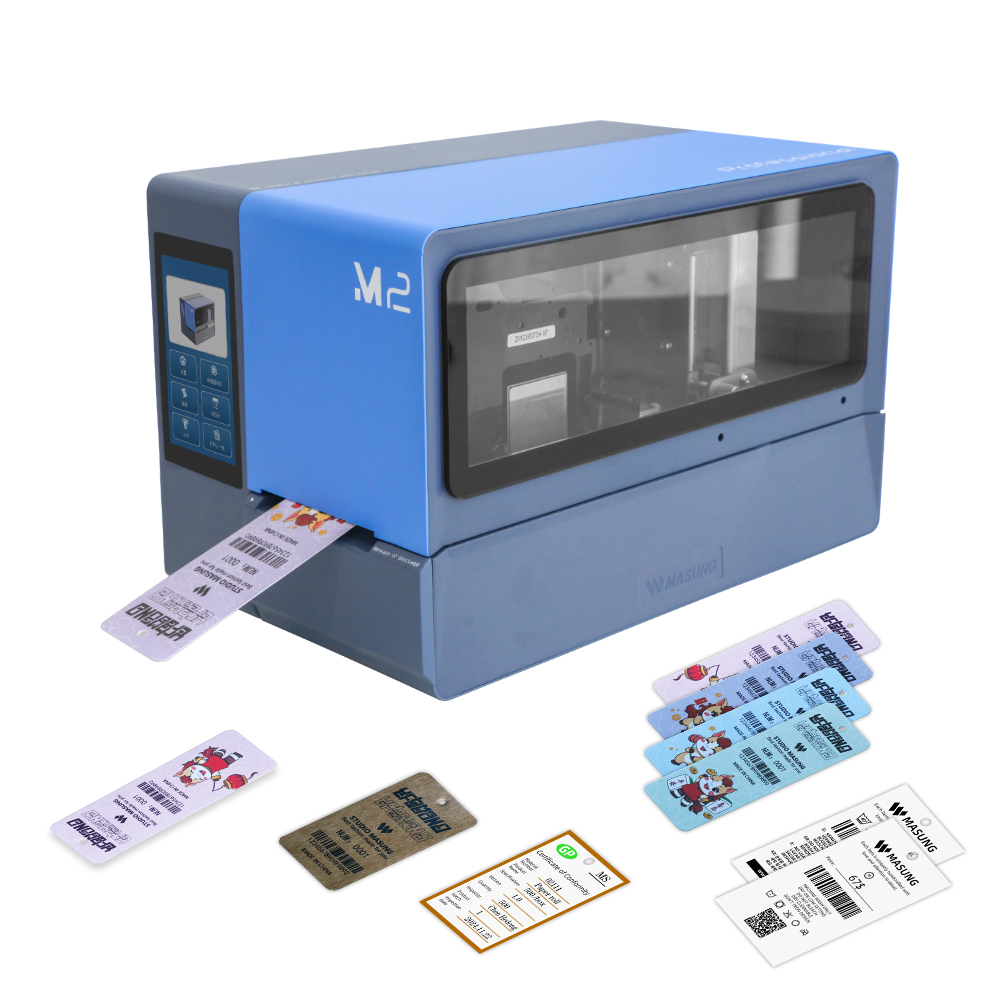
Masung MS-CH651-M1
Type: Thermal transfer hang tag printer
Key Features:
- 300 DPI resolution for clear text, logos, and barcodes
- Automatic card feeding to support batch printing
- Up to 100 tags per loading cycle when using 0.9 mm-thick tags
- Adjustable tag width: 33–55 mm
- Maximum printable width: 55 mm
- PC-based editing and USB connectivity for preparing and sending print jobs
How It May Help
The MS-CH651-M1 may suit apparel businesses that need to print product information, prices, size details, brand logos, or barcodes on compatible hang tags. Its 300 DPI resolution supports clear text and graphic elements, while automatic card feeding can reduce the need to load each tag individually during batch printing. PC-based editing also allows users to prepare and update tag layouts according to different product requirements.
For businesses considering a custom hang tag printer, it is important to verify that the equipment matches their actual tag specifications. The MS-CH651-M1 supports hang tags measuring 33–55 mm in width, with a maximum printable width of 55 mm and a specified thickness range of 0.35–0.90 mm. Before purchasing, test the printer with your actual tag stock and designs, particularly if they include small text or barcodes. Also confirm software compatibility, ribbon costs, and routine maintenance requirements to assess its suitability for your production workflow.
Conclusion
Choosing a suitable hang tag printer machine for clothing manufacturing and retail depends on a business’s printing needs, tag materials, production volume, and budget. Clear text, readable barcodes, consistent branding, and reliable printing performance are essential for supporting product identification and daily operations.
Before making a purchasing decision, businesses should evaluate media compatibility, print quality, workflow integration, and ongoing operating costs. Testing the equipment with actual tag materials and representative designs can help identify potential issues before full-scale use.
As apparel collections and product information continue to change, a suitable tag-printing solution can help manufacturers and retailers manage production more flexibly, reduce reliance on preprinted inventory, and maintain accurate product information throughout the supply chain. Businesses comparing options should also consider a hang tag printer for clothing manufacturer that matches their specific production requirements.